
It’s Not About the Biggest Screen. It’s About the Right Screen.
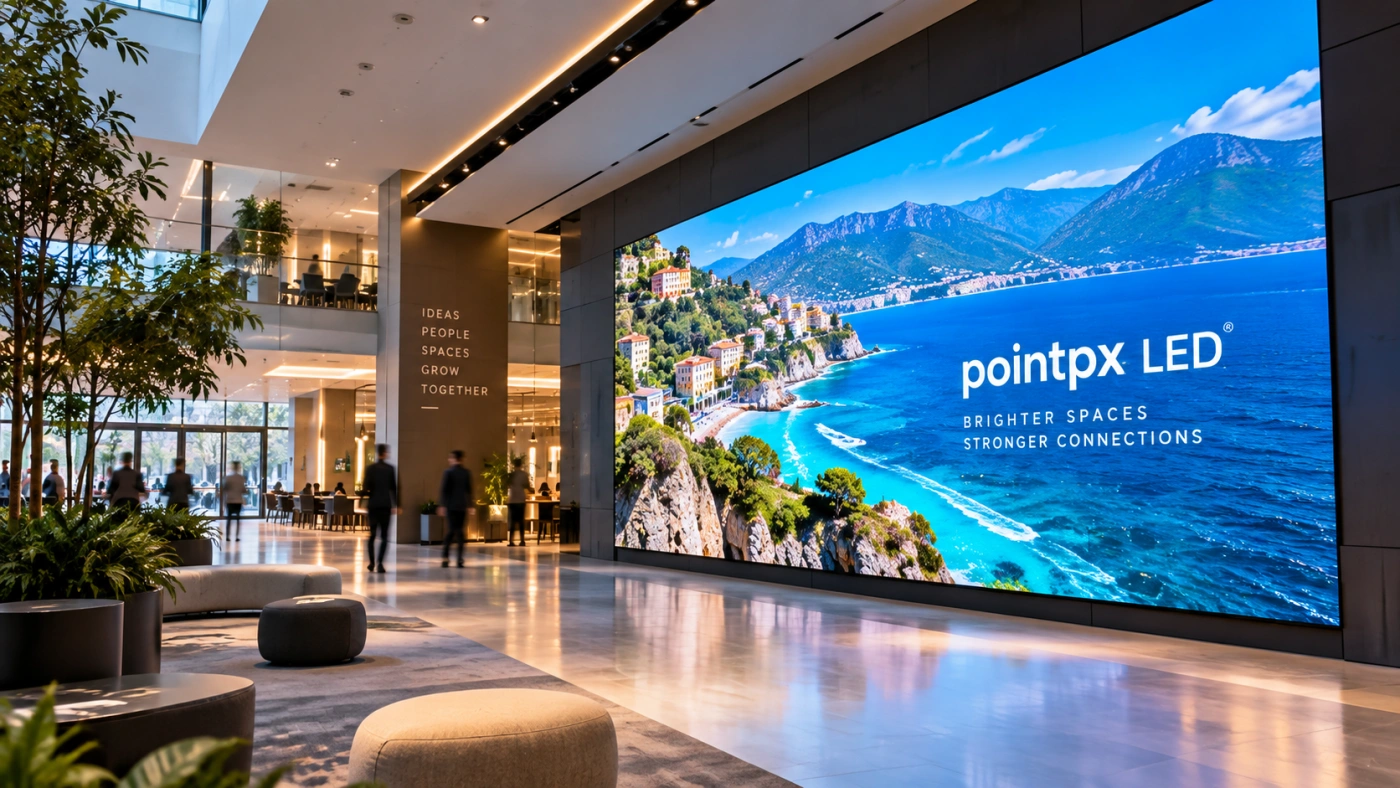
Indoor LED displays are no longer limited to event venues. From retail stores and showrooms to corporate lobbies and meeting rooms, they have become an important part of how brands communicate within physical spaces. Their seamless large-format canvas and modular construction allow LED systems to be adapted to a wide range of architectural environments.
Choosing an effective system, however, requires more than comparing screen size or resolution. Viewing distance, content type, installation environment and the architectural characteristics of the space should all be considered together.
Why Does Pixel Pitch Matter?
People typically view indoor displays from much shorter distances than outdoor LED screens. This makes pixel pitch—the distance between LED pixels—one of the key factors affecting perceived image detail.
A finer pixel pitch can provide greater pixel density and sharper visuals at close range, but choosing the smallest possible pitch is not automatically the best investment. A boardroom displaying detailed presentations has different requirements from a large shopping-mall installation viewed from several metres away. The specification should therefore be matched to the actual viewing conditions.
Where Are Indoor LED Displays Used?
In retail stores and showrooms, LED displays can present products, campaigns and brand stories with strong visual impact. In hotels and corporate lobbies, they can transform an otherwise static wall into a dynamic communication surface. In meeting rooms, large seamless displays can provide a powerful platform for presentations and corporate content.
The same technology can also be used in shopping malls, event venues, control rooms and other commercial environments. Thanks to modular construction, display dimensions and aspect ratios can be designed around the architecture rather than being limited to conventional television sizes.
A Digital Surface Designed Around the Architecture
A well-designed indoor LED display should not feel like an oversized monitor added to a finished room. Screen dimensions, position, viewing angles, content ratio and installation method should be considered together from the beginning of the project.
When properly integrated into retail, showroom and corporate environments, an LED display becomes more than a piece of technology—it becomes part of the space itself.
The Right Project Starts with the Right Specification
The goal of an indoor LED investment should not be to purchase the highest specification available. It should be to build the right display system for the intended environment and purpose.
pointpx LED evaluates dimensions, viewing distance, usage requirements and content needs to help determine the appropriate display size, resolution and pixel pitch for each project.
Let’s design an indoor LED display solution tailored to your space.